

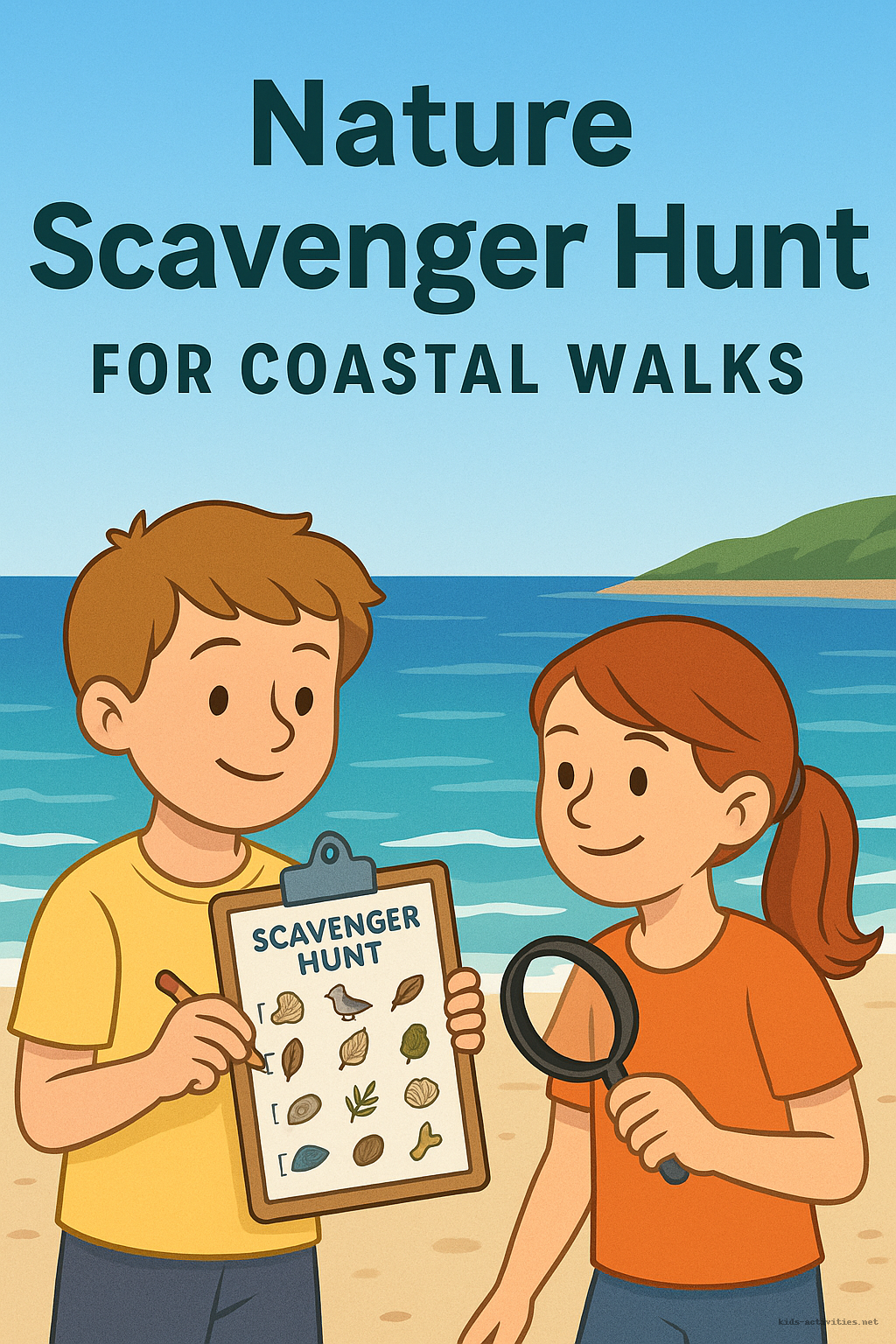
What’s Missing from a Coastal Walk?
A peaceful coastal walk sounds like a great family outing — until your child announces they’re tired, bored, or “done” five minutes in. Sound familiar?
While the coastline offers endless visual wonders, children often need a sense of purpose to stay engaged. Simply walking and observing isn’t enough. Without direction, their attention wanders, and frustration can take over.
That’s where a nature scavenger hunt comes in — it transforms an ordinary walk into an exciting quest for discovery, where every rock, shell, or footprint becomes a clue.
How Coastal Hunts Spark Learning
A nature scavenger hunt combines purposeful observation with hands-on learning, aligned with the way kids naturally explore:
- Cognitive Engagement: Activates problem-solving, memory, and visual scanning.
- Observation Skills: Sharpens attention to detail and pattern recognition.
- Physical Activity: Keeps little legs moving with excitement.
- Language Development: Encourages description, comparison, and storytelling.
Studies in child development show that goal-driven exploration improves focus, attention span, and overall enjoyment of outdoor activities — especially in unfamiliar natural settings like coastal trails.
How to Set Up Your Coastal Quest
1. Choose Your Route
Pick a coastal path that’s family-friendly with varied terrain:
- Sandy shores
- Rockpools
- Coastal vegetation
- Tide zones
Tip: Look for paths with easy access, parking, and shaded areas.
2. Prep the Hunt Sheet
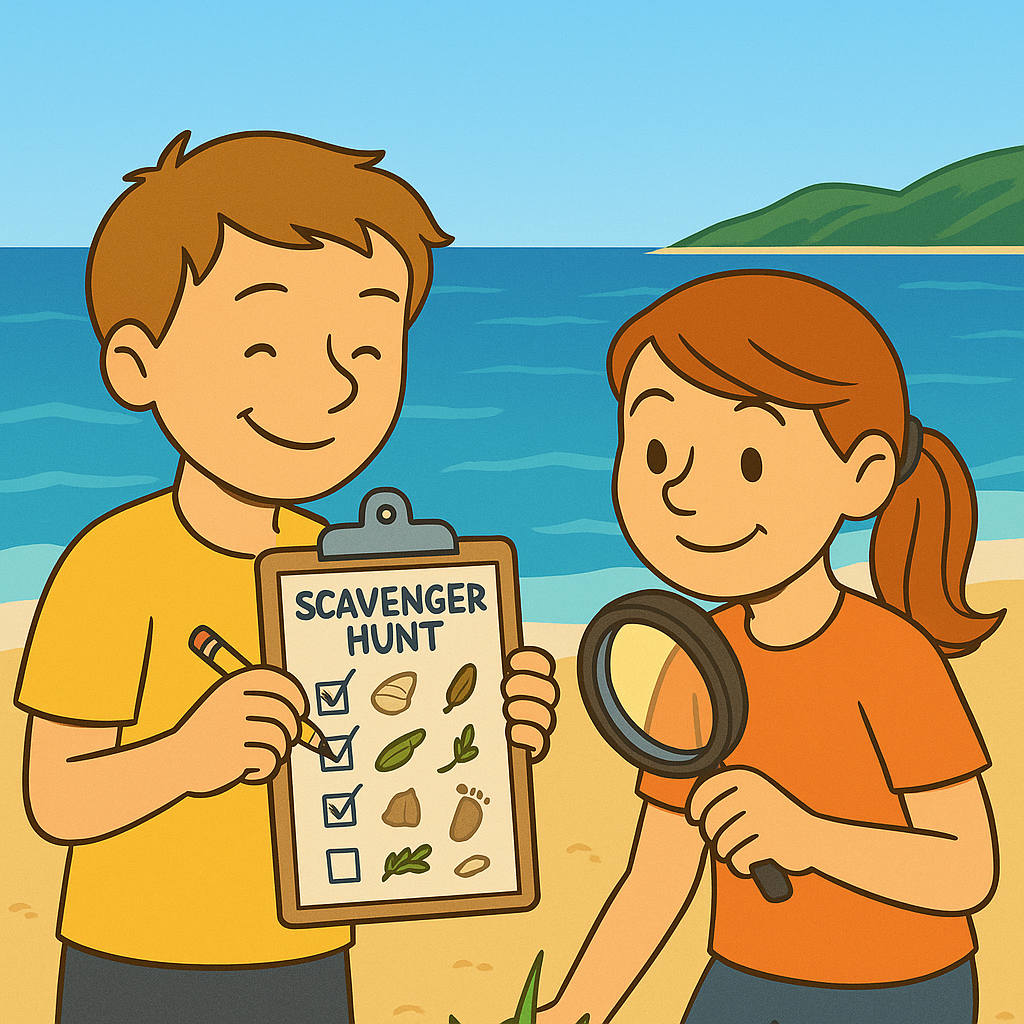
Create a list of 10–15 nature items to find. Use visuals for younger kids, and categories or riddles for older ones. Include a mix of:
Natural Objects
- A smooth pebble
- A spiralled shell
- A feather
- Dried seaweed
Living Things or Signs
- Bird footprints
- Crab hole
- Buzzing insect
- Nest or burrow
Coastal Plant Life
- Saltbush leaf
- Flowering dune plant
- Spiky grass
Environmental Features
- Foam line from waves
- Tide mark
- Driftwood
- Natural arch or rock formation
Insert visual hunt sheet here
Image filename: Coastal_Scavenger_Hunt_Checklist.png
Alt text: “Printable scavenger hunt sheet with coastal nature items and checkbox grid”
3. Gather Your Tools
Let each child carry their own small “explorer kit”:
- Clipboard or hard surface
- Pencil/marker
- Magnifying glass
- Ziplock bag for non-living samples
- Optional: digital camera or phone for photos
Safety Note: Avoid collecting anything alive. Observe, photograph, then leave it in place.
4. Set Ground Rules
- Respect wildlife and fragile ecosystems.
- No running near cliffs or tidepools.
- Stay within visible distance of adults.
- Hands off jellyfish or sharp shells.
5. Start Exploring!
Encourage your child to:
- Shout “found it!” when spotting an item
- Explain why something fits the clue
- Snap a photo if unsure or excited
- Mark progress with a big tick or sticker
Bonus Idea: Add Challenges
Make the experience more engaging with:
- “Nature Bingo” (e.g., three in a row = snack break)
- “Riddle Clues” (e.g., “I wave but have no hand — what am I?”)
- “Timed Rounds” (who can find 5 items in 10 minutes?)
Adjusting the Hunt for Every Age
For Toddlers (Ages 2–4):
- Use colour matching (“find something blue”)
- Stick to safe, flat sandy areas
- Limit the hunt to 5–6 items with icons
- For Ages 5–8:
- Use photo-based cards
- Include sensory clues (“something that smells salty”)
- Reward with mini-prizes
For Ages 9–12:
- Create journal pages for notes or sketches
- Use riddles or fact-based clues
- Include “eco-questions” (e.g., Why do tide marks matter?)
Real Reactions from Families
“We used to struggle to keep our son walking — now he leads the trail with the checklist!” – Marcus, WA
“The riddles made it feel like a real treasure hunt.” – Kylie, VIC
Printable Tools to Take Along
Coastal Scavenger Hunt Kit PDF includes:
- Full-colour printable scavenger sheet
- Customisable checklist template
- Junior Nature Explorer certificate
- Riddle clue cards
- Observation & sketch journal pages
[Download the Full Toolkit PDF Here]
Keep Exploring with These Resources
- [Ocean-Themed Activities for Young Explorers]
- [Floating and Sinking Experiment Kit]
- [Hands-On Beach Science: 5 Seaside STEM Missions]
Let the Shoreline Be Your Classroom
A coastal walk can be so much more than a stroll — it can be a journey of discovery, connection, and curiosity. With a simple scavenger hunt, you empower your child to observe, question, and celebrate the natural world.
Subscribe to our Free Activity for more printable guides