

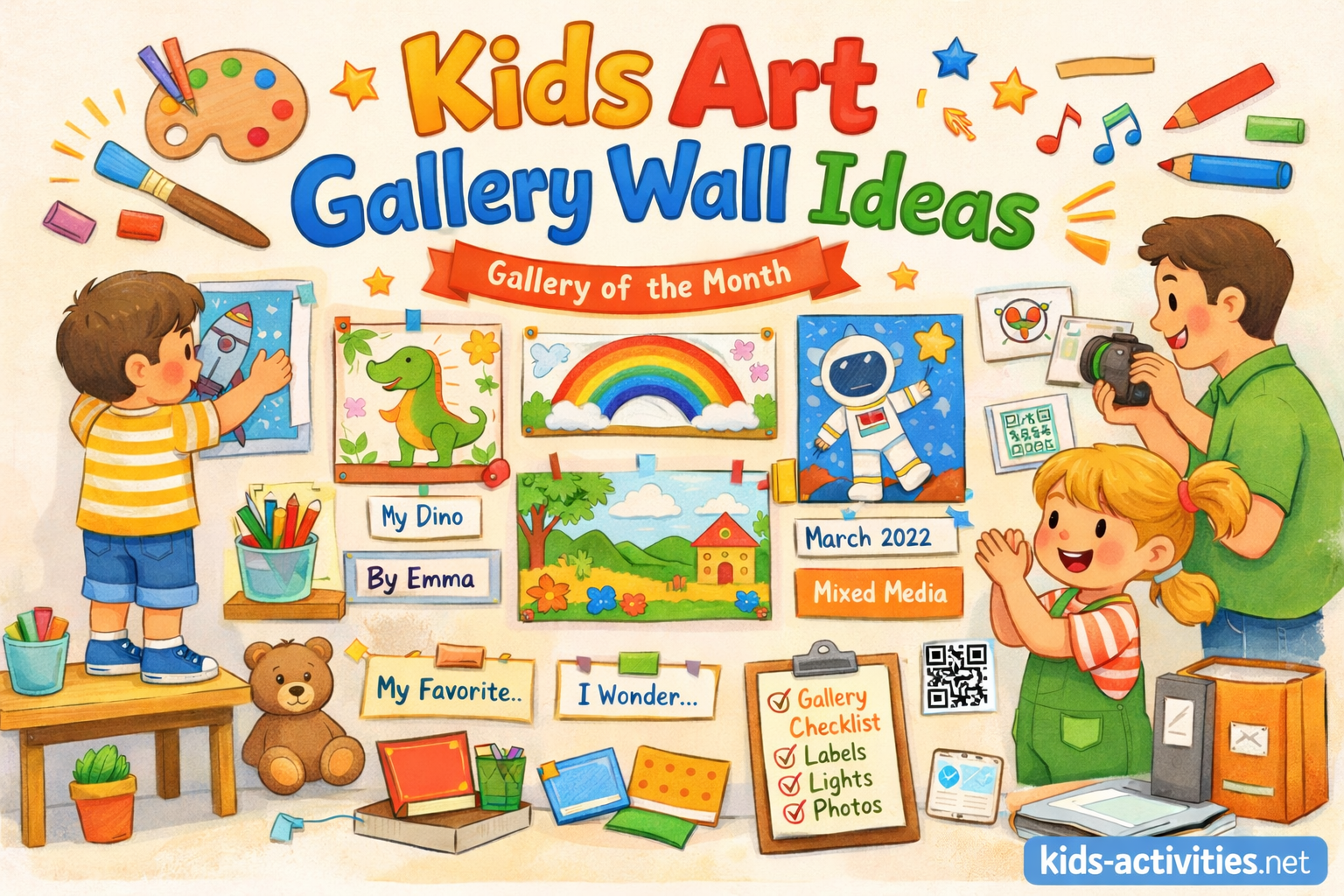
Kids Art Gallery Wall Ideas: How to Display Children’s Artwork at Home
Why This Blog Matters
If you’re a parent or teacher, you already know kids make a LOT of art — at school, at home, at after-school clubs, or spontaneously at the kitchen table.
But most homes face one of these challenges:
Artwork piles up and gets thrown away
Parents feel guilty but don’t know how to store it
Kids stop caring because no one is “seeing” their art
Creativity feels like clutter instead of value
This blog solves all of that with one smart concept:
A “Monthly Art Gallery Wall”—a rotating exhibition that turns children’s artwork into curated collections with labels, themes, and family/public viewing moments.
This project is educational, confidence-building, and beautifully practical.
What Is a Monthly Art Gallery Wall?
A Monthly Art Gallery Wall is a designated display area where kids:
Choose artworks
Curate a themed collection
Add labels and stories
Open a “gallery event”
Take photographs for digital archiving
Store the month’s collection afterward
This project combines:
Art & Creativity
Language Arts (titles + labels)
Executive Skills (organizing + planning)
Media & Technology (archiving)
Family Engagement
Whether you live in an apartment, villa, townhouse, or school classroom, this system works.
Why It’s Powerful for Child Development
1. Confidence & Identity
A gallery wall sends psychological messages like:
“Your ideas matter.”
“Creativity has value.”
“You are a storyteller.”
Confidence research shows kids thrive when their work is seen, not judged.
2. Visual Literacy
Kids learn how to talk about images:
“What did I draw?”
“Why did I choose these colors?”
“What theme connects them?”
That’s curatorial thinking — something usually taught in art school.
3. Language & Communication
Every gallery exhibition includes:
Titles
Date
Materials used
Artist statement
This boosts descriptive writing + articulation + vocabulary.
4. Executive Function Skills
Curating teaches:
- Sorting
- Prioritizing
- Sequencing
- Decision-making
- Presentation planning
These are real-life skills applicable far beyond art.
5. Family and Community Culture
Many parents discover:
Kids talk more during exhibitions than during “How was your day?” conversations.
It becomes a healthy social ritual.
Materials You Need (Flexible & Realistic)
You can do this project super budget, mid-range, or premium:
Budget-Friendly Setup (Most Popular)
- Painter’s tape / masking tape
- String + clothespins
- Washi tape (optional)
- Index cards for labels
- Smartphone for photos
Mid-Range Setup
- Cork board or foam board
- Push pins & clips
- A3 label sheets
- Storage portfolio
- Display frames (IKEA, Muji, etc.)
Premium Setup (For classrooms or design homes)
- Magnetic paint or magnetic strip rails
- Acrylic display frames
- Wall vinyl for title headers
- Document scanner
- Digital art cloud archive
Environmental Option
- Use recycled cardboard for backing boards
- Use packaging paper for matting
- Store artworks in reused pizza boxes labeled monthly
How to Build Your First Gallery Wall (Step-by-Step)
Timeline: 20–40 minutes for initial setup + 1 day of collecting artworks.
STEP 1: Pick the Perfect Location
Good spots include:
Hallways
Kitchen wall
Staircase wall
Classroom bulletin board
Homeschool learning corner
Bedroom wall
Behind a door (surprisingly effective)
Avoid:
Areas with direct sun (fades colors)
Areas with moisture (bathrooms)
Areas blocked by furniture
STEP 2: Install the Display System
Here are 3 clean methods depending on style:
A) Tape & Wall Layout (Minimal)
- Use washi tape for colorful borders
- Create grids or zig-zag layouts
B) String Line + Clips (Boho style)
- Run 2–3 horizontal lines
- Clip art pieces along each line
C) Frame Rail System (Museum style)
- Use picture rails or magnetic bars
- Rotate easily without damaging walls
STEP 3: Collect Candidate Artworks
Help kids gather artworks from:
- Sketchbooks
- School folders
- Notebooks
- Loose sheets
- Crafts & mixed media
- Digital prints (optional)
Tip: Do not curate yet.
Just collect everything into a pile or box labeled:
“Gallery Candidates”
STEP 4: Curate the Monthly Theme
Themes make the gallery feel intentional.
Here are kid-friendly theme ideas:
| Theme Type | Example Themes |
|---|---|
| Seasons | Winter Wonders, Spring Garden, Autumn Leaves |
| Colors | Blue World, Rainbow Month, Gold & Black |
| Subjects | Animals, Space, Friends, Food, Robots |
| Emotions | Joy & Happiness, Calm Colors, Angry Art |
| Media | Marker Month, Watercolor Week, Collage Collection |
| Storytelling | My Adventures, My Dreams, Places in My Brain |
| Academic | Science Art, History Portraits, Nature Studies |
If kids are stuck, ask:
“Which artworks feel connected?
By color? By topic? By feeling?”
Let the theme emerge naturally from the artworks — don’t force it.
STEP 5: Add Artist Labels & Titles
This is where literacy skills kick in.
Kids create label cards that include:
- Title (e.g. “Rainbow Cat”)
- Artist Name (First name only for public spaces)
- Medium (Marker, watercolor, collage, etc.)
- Date (Month + Year)
- Short Story (1–3 sentences)
Example student label:
Title: Rocket to Saturn
Artist: Lina (Age 7)
Medium: Crayon + Watercolor
About this work: I like Saturn’s rings. I made the rocket pink because that’s my favorite color.
If your classroom is multilingual, add bilingual labels.
STEP 6: Hold a Gallery Opening Event
This turns the project into social learning:
Ideas:
Invite family members
Have the artist give a tour
Take “gallery photos”
Record interviews
Collect visitor comments
Add snacks (optional)
Pro tip for shy kids:
- Let them write instead of talk
- Let siblings be the “tour guides”
STEP 7: Digitize & Store the Art
This keeps your home from drowning in paper later.
Options include:
Photography Method
Lay artwork on floor → photograph → cloud folder
Scanning Apps
- Google PhotoScan
- Adobe Scan
- Microsoft Lens
Cloud Archiving
Store albums by month:
2026-01 Gallery
2026-02 Gallery
etc.
Physical Storage
Use:
- Art portfolios
- Clear A3 folders
- Labeled cardboard boxes
- Expandable files
Archiving reduces guilt and clutter while keeping memories safe.
Classroom Extensions (Teacher-Approved)
Teachers can expand this into deeper curriculum work:
Language Arts Integration
- Write artist bios
- Write mini catalog texts
- Write interview questions
- Journal reflections
Math & Geometry Integration
- Layout planning (grids & spacing)
- Measurement & symmetry
- Scale drawings
Social Studies / Geography
Study famous galleries:
- The Louvre
- The Tate Modern
- The Met
- The Uffizi
Kids discover that curation is cultural.
Art History
Introduce museum practices:
- Curators
- Conservators
- Archivists
- Docents
- Exhibition designers
Kids learn that art is a real profession, not just drawing.
Presentation & Public Speaking
Have students practice:
- Describing media
- Explaining meaning
- Answering questions
This builds communication confidence.
Digital-Friendly Adaptations
If families move a lot or have limited walls:
1. Virtual Gallery
Use:
- Google Slides
- Canva slideshow
- PowerPoint export
- Apple Photos Albums
2. Online Portfolio
Ages 10–14 can use:
- Behance Junior
- Artsonia (classrooms)
- Padlet (safe & private)
3. Family Group Chats
Share monthly compilations in:
- Messenger
- Telegram
- LINE
Digital counts as real validation.
Behavior, SEL & Confidence Impact
Parents report:
Fewer arguments about cleanup
Kids make “finished” works instead of scribbles
Kids want to retry and improve (growth mindset)
Kids feel proud when visitors see their art
Kids keep track of their own projects
This project is used by:
- Montessori schools
- Reggio Emilia classrooms
- Homeschool communities
- Child development therapists
- Gifted art programs
Because it fits SEL (Social-Emotional Learning) goals.
Variations for Different Ages
Ages 3–5 (Early Childhood)
Focus on:
Color
Texture
Expression
Labels include:
- Kid dictation (adult writes)
- Simple titles
Ages 6–9 (Elementary)
Add:
Artist statements
Thematic collections
Material lists
Ages 10–14 (Tween)
Add:
Curatorial essays
Digital archiving
Exhibition graphics
Catalog pages
Self-critiques
What to Do After Each Month
When the month ends, do one of these 3:
Option A: Archive & Store
- Photograph
- Scan
- Save digital album
- Store originals in box
Option B: Portfolio Book
Once a year, use:
- Chatbooks
- Shutterfly
- Snapfish
- Artifact Uprising
Create a printed art book.
Option C: Gift Artworks
Kids choose artworks to send to:
- Grandparents
- Aunts/uncles
- Friends
- Neighbors
Add thank-you notes for social-emotional learning.
Helpful Tools for Parents & Teachers
Recommended Photo Scanners
- Google PhotoScan (free)
- Adobe Scan (free)
- iScanner (iOS/Android)
Kid-Friendly Frames
- IKEA Lomas
- Muji acrylic frames
- Command photo ledges
Safe Hanging Tools
- Command Strips
- Masking tape
- Reusable putty
- Magnetic strips
Frequently Asked Questions
Q: “What if my child produces too much art?”
A: Use curation rules:
- Only 6–10 pieces per month
- Keep based on theme
- Store others digitally
Q: “What if my child doesn’t want to choose?”
A: Offer guided choices:
- “Pick 3 that make you smile”
- “Pick 2 that fit the theme”
- “Pick 1 you want to talk about”
Q: “What if I don’t want to damage my walls?”
A: Use string lines or magnetic strips.
Q: “What age is too old?”
A: None — middle schoolers LOVE theme curation.
Final Thoughts — The Art Wall Philosophy
A Monthly Art Gallery Wall is not just decoration.
It is a respect system.
It tells children:
Creativity is contribution
Ideas deserve space
Expression deserves audience
Process is as valuable as product
This turns homes and classrooms into mini cultural centers — not just storage and homework zones.

Recent Posts
Family Podcast Project for Kids: A Fun Educational Activity That Builds Confidence
Build a Marble Roller Coaster: A Hands-On STEM Challenge for Kids