
Global Pen Pal Day for International Day of Education
Why International Day of Education Matters
Education is more than textbooks, classrooms, and test scores—it is how children learn to communicate, imagine, question, and connect. Every year on January 24, the world celebrates the International Day of Education, recognizing that learning is both a universal right and a powerful tool for shaping the future.
For parents and homeschool families, this day offers an inspiring opportunity to turn the world into a classroom. One of the most meaningful ways to celebrate is through global connection—helping children understand how other kids live, learn, and play in different cultures.
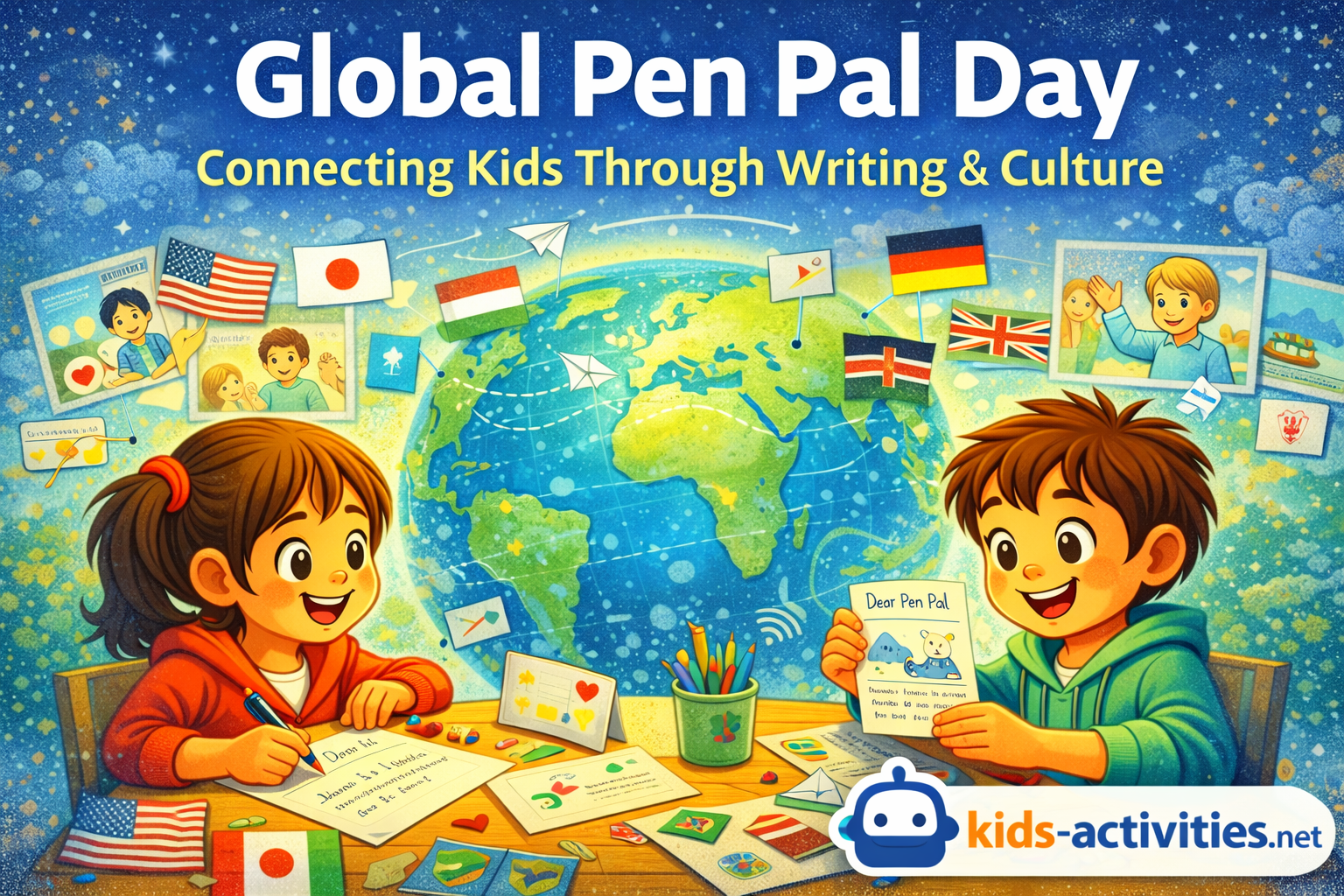
That’s where Global Pen Pal Day comes in. This hands-on, literacy-rich project helps children write letters, exchange drawings, ask curious questions, and build cross-cultural friendships. It’s simple to start, deeply educational, and incredibly impactful.
This complete guide provides everything you need: preparation steps, letter templates, learning outcomes, extension activities, discussion questions, and meaningful reflections. By the end, your child won’t just improve their writing—they’ll expand their worldview.
Why Pen Pal Activities Are Powerful for Learning
Children often view the world through what they directly experience: their home, their school, their family, and their neighborhood. Pen pal activities gently expand that worldview by bringing real voices, stories, and perspectives into a child’s life.
Here are core benefits that make pen pal exchanges ideal for the International Day of Education:
Literacy Growth
Writing letters builds:
- Sentence structure
- Storytelling & sequencing
- Vocabulary
- Clarity of expression
- Audience awareness
Kids learn that writing has purpose, not just correctness.
Cultural Awareness
Children compare:
- School routines
- Traditions & holidays
- Clothing & food
- Languages spoken
- Games & play styles
This builds curiosity rather than stereotypes.
Empathy & Perspective Taking
When children ask:
“What is their life like?”
They begin practicing compassion and respect—skills often considered “soft” but essential for global citizenship.
4. Real Communication Practice
Pen pal letters are authentic writing tasks, not worksheets. They involve:
- Asking questions
- Sharing personal details
- Listening (through reading)
- Responding thoughtfully
It mirrors how adults communicate.
Motivation Through Relationship
Children write more when they are excited, and pen pals offer natural motivation because there is a real human on the other side.
For homeschool learners especially, this introduces meaningful peer interaction outside the home environment.
Who This Activity Works For
This project fits children ages 6–12, and works beautifully in:
Homeschool families (solo or co-op)
Parents seeking enrichment activities
After-school clubs or community groups
Libraries or tutoring centers
Virtual schooling communities
Even without an international partner, the activity can be adapted (we’ll show you how).
What You’ll Need
Minimal supplies are required:
Basic materials:
- Paper or cards
- Pens, pencils, colored markers
- Printer (optional for templates)
- Envelope (if mailing)
- Stickers (optional but fun!)
Optional digital tools:
- Email (scan or photo)
- Classroom pen pal platforms
- Digital scrapbooking apps
Step-by-Step Activity Guide
Below is a guided structure that parents and homeschool families can use.
STEP 1: Introduce the Idea of Global Connection
Start by asking:
- “Do you think kids everywhere learn the same things?”
- “What might be different about school in another country?”
- “What would you want another kid to know about your life?”
You can show:
A map
A globe
Slides or photos of schools around the world
A short documentary clip
This builds context for the exchange.
STEP 2: Choose a Pen Pal Format
You have three main options:
Option A: International Pen Pal Exchanges
Platforms exist for kid-safe pen pal matching, such as:
- Language learning communities
- School partnerships
- Global homeschool networks
Parents should always supervise communication for safety.
Option B: Domestic Pen Pals
If international is not accessible, choose:
- Children in another state or city
- A friend’s homeschool group
- A cousin or family friend
- A co-op across town
Domestic differences are still educational.
Option C: “Simulated Pen Pals”
If no partner exists, create a Pen Pal Binder, where:
- Child writes letters
- Parent writes back “as the pen pal”
- Letters include cultural facts & photos
This builds the same skills and can later transition to real exchange.
STEP 3: Prepare Letter Templates
Below are developmentally appropriate examples.
Template for Ages 6–8 (Fill-In Style)
My name is ____________.
I am ___ years old.
I live in ____________ (city/state/country).
My favorite food is ____________.
I love to ____________.
At school, I am learning about ____________.
My favorite game is ____________.
I have a question for you:
Template for Ages 9–12 (Paragraph Style)
Children write using a prompt:
“Dear Pen Pal, my name is __________ and I am ___ years old. I live in __________, which is known for __________. In my family we like to __________. Since it is __________ here right now, we often __________. My favorite subjects are __________ and __________ because __________. I also enjoy __________ in my free time. I am curious about what your life is like. What is school like where you live? What foods are common? What kinds of games do you play? I look forward to learning more about you.”
STEP 4: Add Drawings or Photos
To make the exchange richer, children can include:
A drawing of:
- Their home
- A local animal
- A favorite meal
- Their school
A printed photo of:
- A scenic location
- A pet
- A family activity
- Weather or seasons
Visuals are universal language for young learners.
STEP 5: Ask Curious Questions
Provide your child with a list such as:
- What languages are spoken where you live?
- What does your school day look like?
- What games do kids your age enjoy?
- What foods are traditional?
- What holidays do you celebrate?
- What subjects do you study?
The goal is to build knowledge, not just swap facts.
STEP 6: Send & Wait
Whether through:
✔ traditional mail
✔ scanned email
✔ digital classroom folder
Waiting builds anticipation and patience—an emotional learning component.
Cross-Curricular Learning Extensions
For homeschool families, this project can expand into multiple subjects:
1. Social Studies & Geography
Use maps to mark:
✔ pen pal countries
✔ languages spoken
✔ climates and geography
✔ oceans and borders
Add mini-reports:
“Japan has four seasons like we do.”
“Kenya has savannas where elephants live.”
2. Language Arts
Letter writing builds:
- handwriting
- formatting
- audience awareness
- descriptive language
- grammar in authentic context
3. Cultural Studies
Study:
- celebrations
- clothing
- values
- schooling systems
- musical traditions
4. Art
Make:
- stamps
- postcards
- envelope decorations
- travel-themed drawings
5. Technology
If digital:
- type letters
- scan drawings
- insert photos
- create digital travel maps
This blends modern skills with traditional communication.
Reflection & Discussion
After replies are received, parents can ask:
“What surprised you about your pen pal?”
“What was similar? What was different?”
“How does education help kids in different places?”
“What do you wish all children could learn?”
Homeschool families can turn this into a journal entry, presentation, or project board.
How to Connect If You Want Ongoing Pen Pals
You can:
- Exchange monthly or seasonal letters
- Do holiday or birthday mail
- Share little drawings or flat crafts
- Create a year-long cultural study
Some families even video chat later (with parent supervision), but letters build literacy more effectively.
Educational Outcomes (Parent & Homeschool Perspective)
Literacy & Writing Skills
Children learn actual writing purpose—not just worksheets.
Global Citizenship
Kids gain perspective about how other children live.
Empathy Development
Seeing through another child’s eyes teaches compassion.
Cultural Competence
Kids learn cultural differences without judgment.
Executive Function
Children must plan, draft, revise, address, send, and wait.
Intrinsic Motivation
Motivated writing leads to faster skill growth.
Why This Matters on International Day of Education
The United Nations emphasizes:
- inclusivity
- equality
- global citizenship
- lifelong learning
Pen pal activities embody these, because they show children:
“Education connects us. It doesn’t divide us.”
Even without travel, global friendships can begin at the kitchen table.
Practical Tips for Parents & Homeschoolers
Supervise all digital communication
Review letters before sending
Model respectful curiosity
Avoid cultural assumptions
Store letters in a binder for memory books
Many homeschool families create:
“Global Learning Portfolios”
where each country gets a divider.
Conclusion
The world is large, diverse, and fascinating—and education is the bridge that helps children cross borders without leaving home. By celebrating International Day of Education with a Global Pen Pal Day, parents and homeschoolers give children more than a writing assignment—they give them perspective, empathy, and connection.
So print your templates, grab your envelopes, pull out the map, and let the learning journey begin. The world is waiting to be discovered—one letter at a time.

Recent Posts
Family Podcast Project for Kids: A Fun Educational Activity That Builds Confidence
Build a Marble Roller Coaster: A Hands-On STEM Challenge for Kids